Some destinations I am content to learn about in situ. And then there are places like Gettysburg for which I feel I must prepare.
And I did prepare for Gettysburg. I refreshed my knowledge of the Civil War (with more than one book), and mentioned to absolutely everyone who would listen that I was going for the first time. Without exception, everyone with whom I chatted about visiting Gettysburg, from close friends to dear strangers on my tours, told me the same thing. It’s an amazing place. It is truly an experience to be there. You can feel them around you on the battlefield.

And with those enormous expectations packed away next to my socks, I went to Gettysburg for the first time. Y’all, I was secretly terrified I would get there and not have the experience everyone had talked about. Perhaps I had read too much about the wrong things, perhaps I should have studied the battle itself more in depth rather than the overall context of the war (I will be the first to admit that reading about battle tactics and troop movements will put me instantly to sleep), maybe I would simply intellectualize it too much. Maybe it would be simply too hot and I would be grumpy. Well, it was too hot, but in the end, I suppose that sort of helped, and Gettysburg ended up giving me the experience I had hoped for.
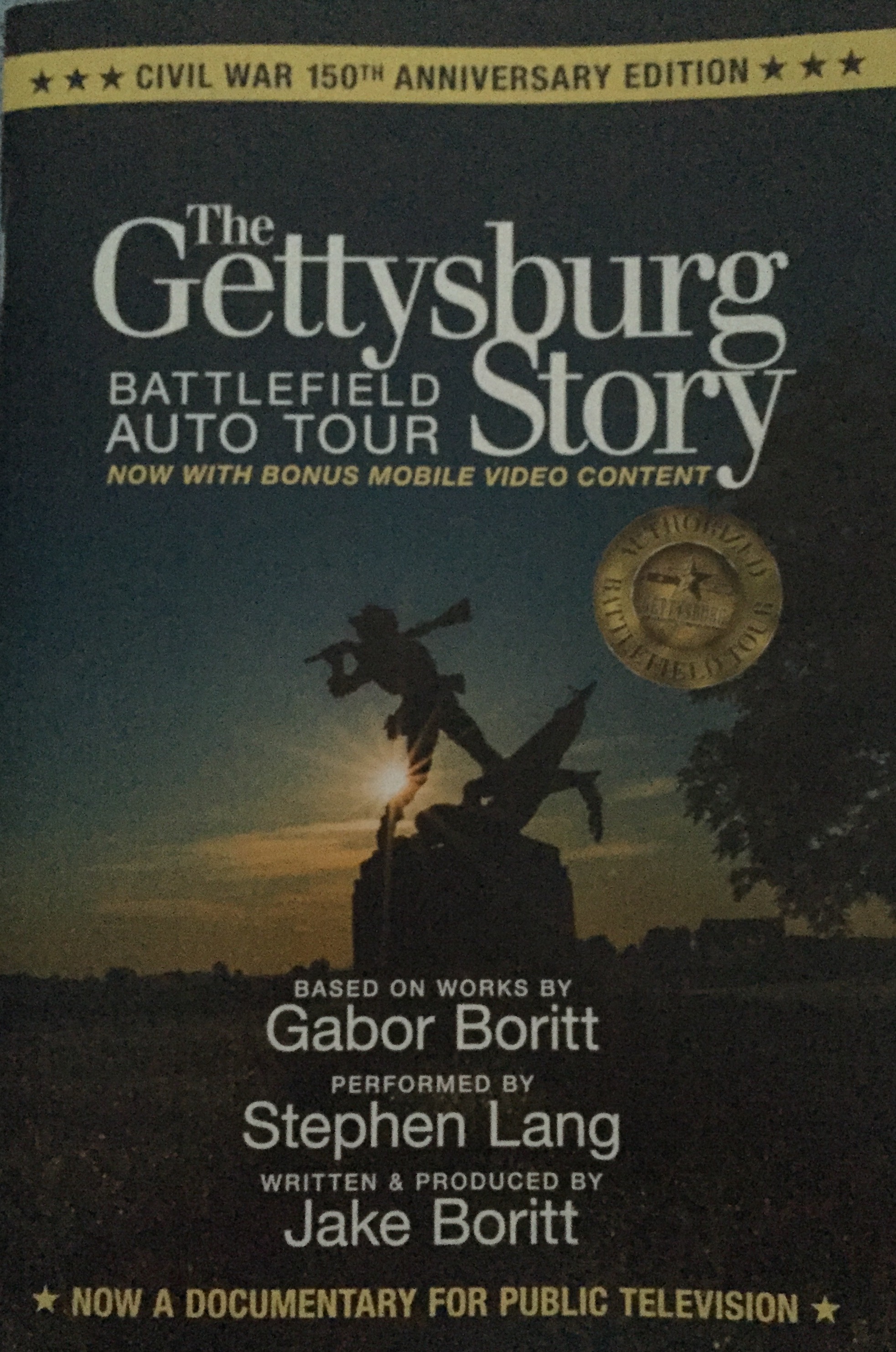
As I hinted in the Essentials post there are many, many options for seeing and experiencing Gettysburg. The Visitor’s Center offers a film narrated by the inimitable Morgan Freeman, a cyclorama of Pickett’s charge and a very thorough museum to walk you through the causes leading to the war, each day of the battle, and the aftermath. There are countless ranger talks on all topics all over the Park, bus tours of the battlefield, certified battlefield guides who will ride with you in your car, more museums throughout the town…a complete education indeed. A wonderful couple on one of my tours recommended to me the Auto Tour, and with our limited time, that is what we chose to guide us through the heart of our visit.
My preference is always for a living guide (perhaps I’m biased), and I do look forward to going back through again with one of the battlefield guides, to add more layers to the story, but the Auto tour is an absolutely wonderful introduction and a comprehensive overview. The narrator tells the stories well, and the best bit is that you can drive through as many times as you’d like and listen to it all again afterwards (and take as many breaks as you want in the middle). After my own overview, I’ll share with you a couple of my favorite stories.
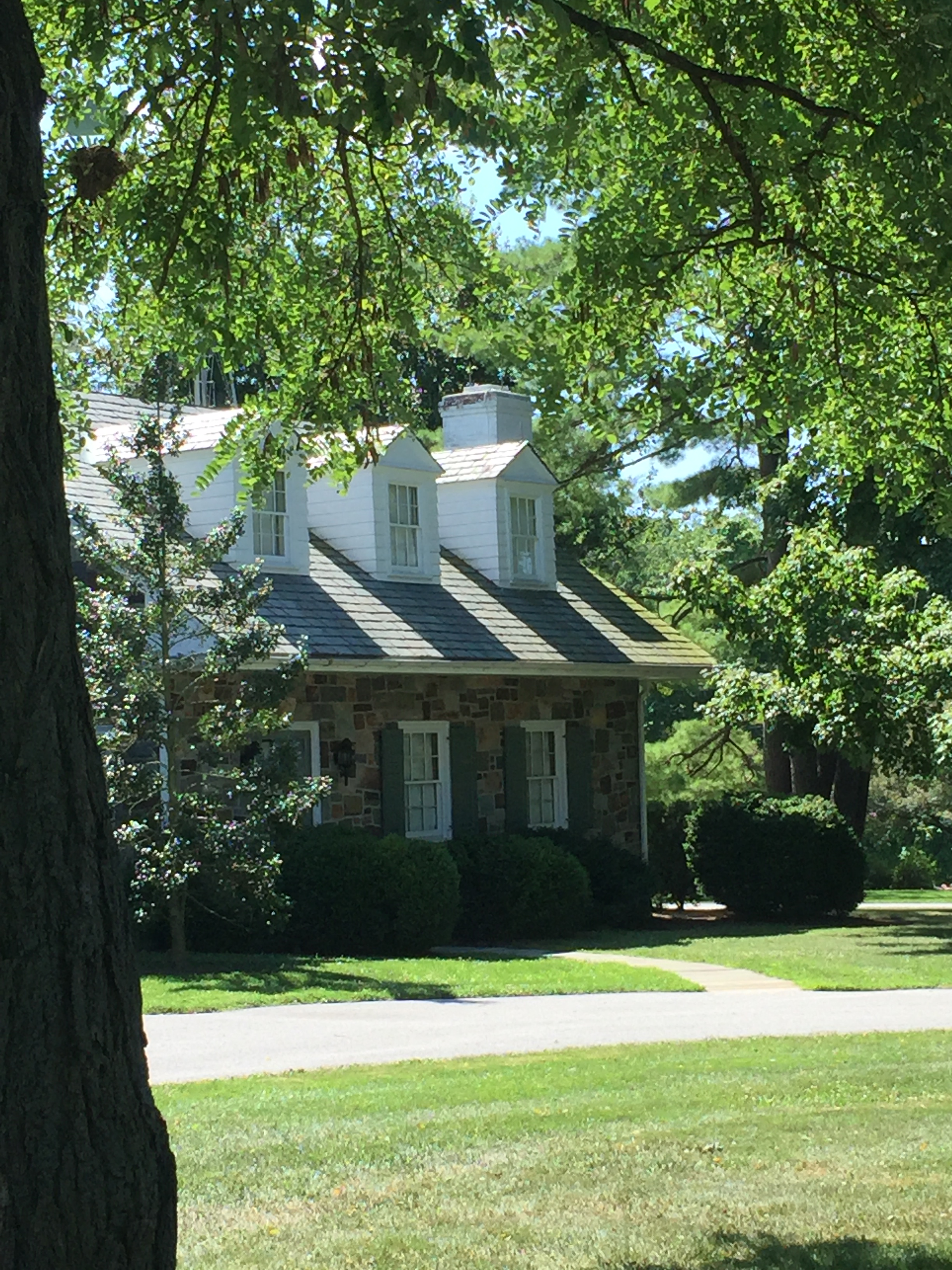
Along with the Auto Tour of the Park, and the film and museum, we also visited the Eisenhower and Spangler farms, both excursions offered through the Visitor’s Center. The Spangler Farm served as a field hospital during and for five weeks following the battle. I believe it is only open on the weekends in the summer months, so I’m glad we caught it. There we learned about the Spangler family, subsistence farmers who lost their entire year’s crop and all their livestock to the battle and the hospital afterwards, who were forced to live all in one room of their own home for the five weeks the hospital was in residence, who lost one of their fields permanently to the graves of 250 soldiers, and who ever only received $60 in compensation for their losses. Intrepid folks that they were, though, the Spanglers rebuilt, passed along the farm, and thus helped to preserve it for us today.

There we also heard a wonderful talk by one of the rangers about the workings of the field hospitals (and the step, by step process of amputation). The Civil War did offer great improvements in this department by creating the field hospitals themselves, training a dedicated ambulance corp, and instituting the system of triage that we still use in hospitals today. Unfortunately the sanitation was not quite so revolutionary, and a good number of deaths were caused by infection. Though the soldiers did their utmost, either consciously or unconsciously, to treat their ‘poisoned flesh’ with flies and maggots…a terribly unpleasant, but apparently useful treatment in the absence of anything else.

While gruesome tales are certainly prevalent, the battle of Gettysburg also left us with hopeful, if heart-wrenching reminders of the enduring humanity of those who fought here. 163,800 men fought at Gettysburg. 51,000 of them were killed, wounded, captured or reported missing. There are more stories here than we even remember, and more certainly than I can tell in this small space, so I will fill the rest of this page with those images that have stuck with me most vividly since our visit.
…
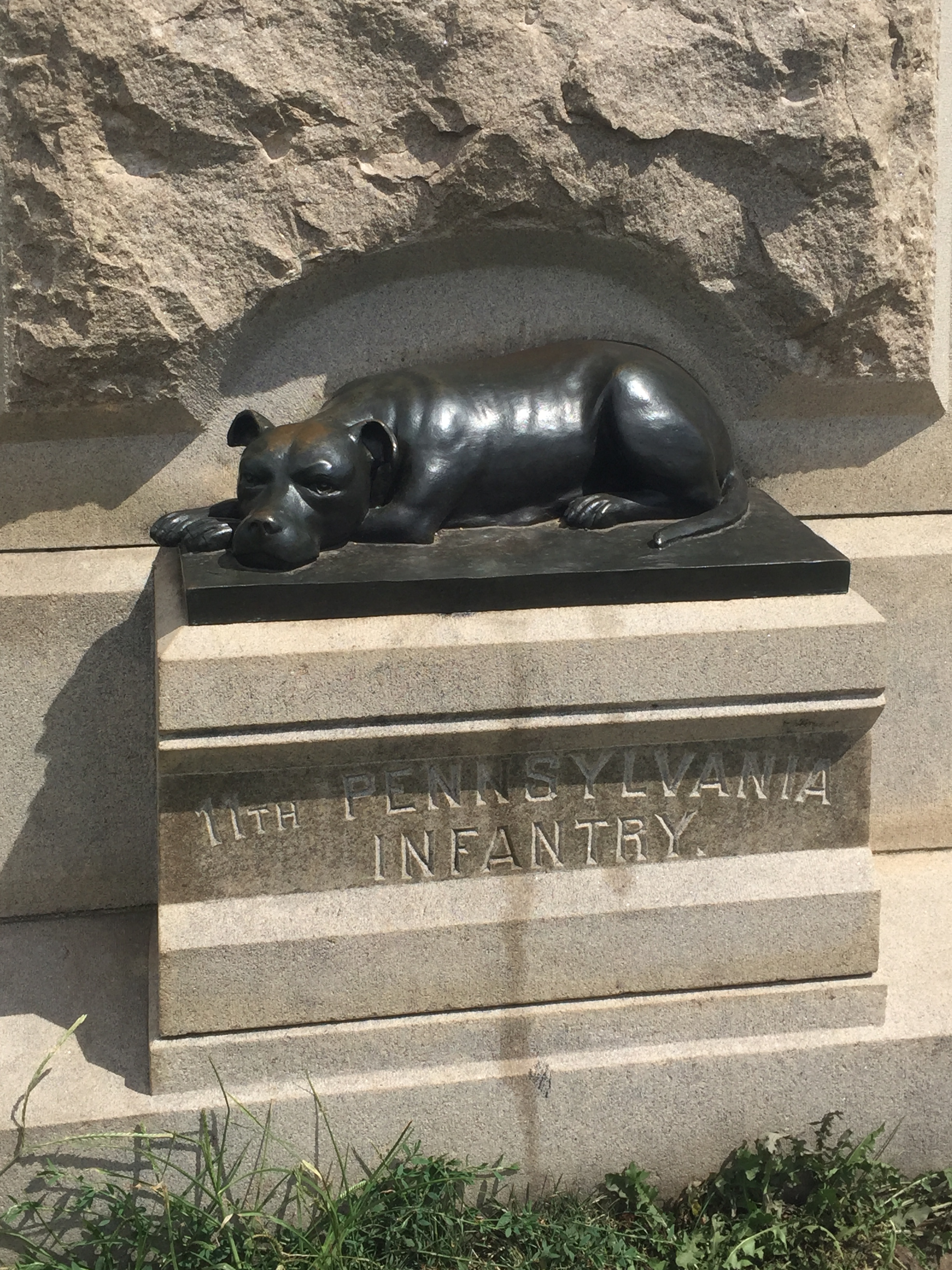
During the first month of their training in 1861, the 11th Pennsylvania volunteers were gifted a four week old pug-nosed brindle bull terrier puppy. They named her Sallie after one of beauties in West Chester where they were training. Sallie immediately endeared herself to the soldiers in her regiment, and when they left for battle, she came along as their mascot. In a spring 1863 review of the Union Army, President Abraham Lincoln saw Sallie marching alongside her men, and gave her a particular salute.

Later that summer, on July 1st, Sallie and the 11th Pennsylvania volunteers were on the field at Oak Ridge. During that first day’s fighting, the regiment was driven back into the town of Gettysburg, and when they were finally able to regroup, there was no sign of Sallie. The soldiers presumed her lost, and were unable to search for her body until the battle ended two days later. Returning to the site of their original position, the men found Sallie, hungry, thirsty, but still alive, guarding the bodies of the 11th Pennsylvania men who had not made it into Gettysburg on the first day of the battle. She marched on until February 6th, 1865, when she met a bullet at Hatcher’s Run. Her broken-hearted regiment buried her on the field where she fell, and when the survivors dedicated their monument on the Gettysburg battlefield in 1890, they ensured that Sallie would lay at the back, her bronze form eternally watching over the ghosts of the men she guarded so carefully in life.
…
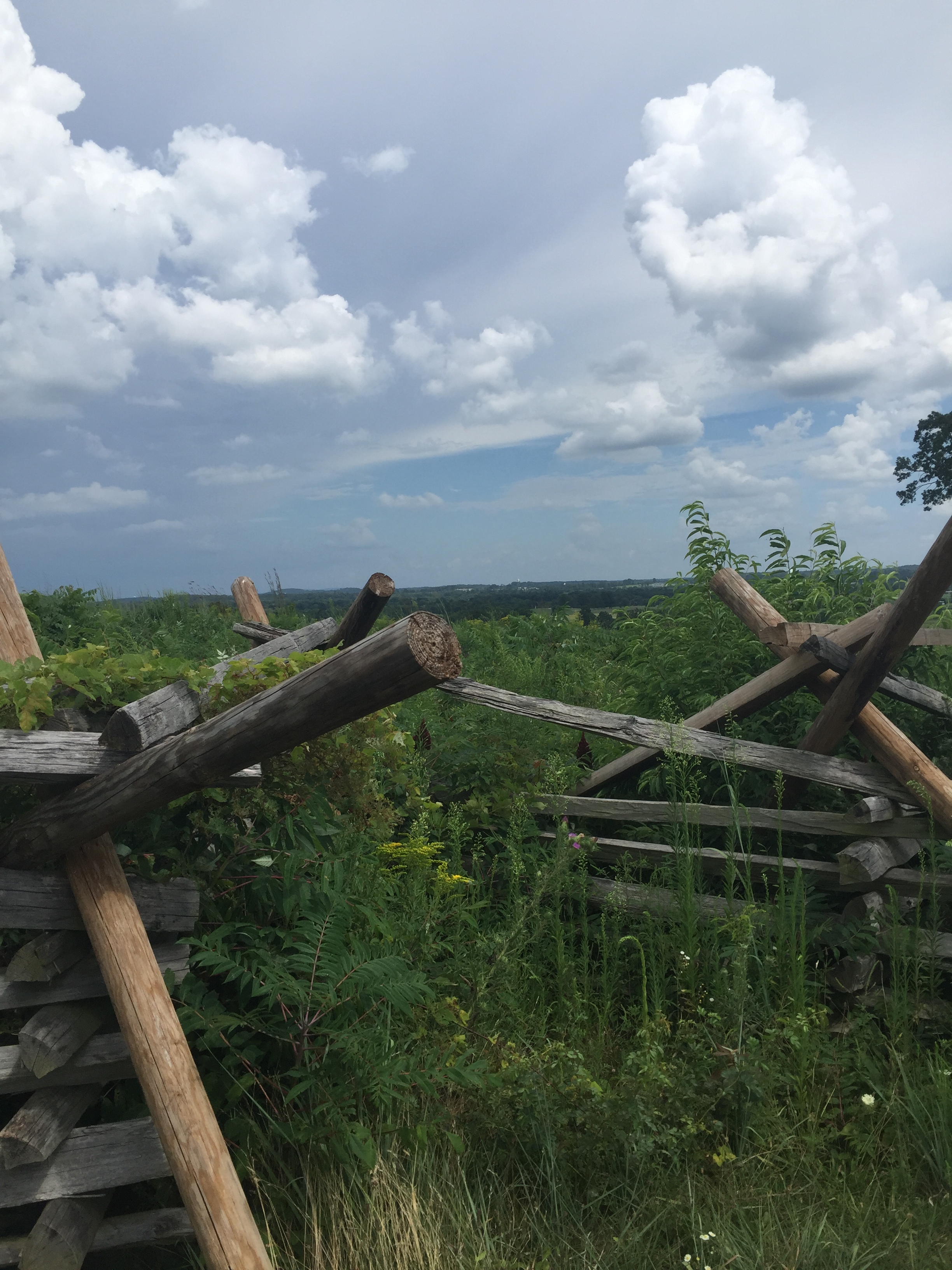 Lewis Armistead and Winfield Scott Hancock had been close friends for 17 years when the Civil War began. A son of Virginia, Armistead joined the Confederate army as a Brigadier General while his friend Hancock, from Pennsylvania, became a General in the Union army. When the two parted to report to their respective sides, Armistead entrusted Hancock’s wife with his prayer book and asked God to strike him dead if he ever brought harm to his friend. Two years later both men arrived at Gettysburg.

On the third day of the battle, Armistead stood on Seminary Ridge just after 1pm, staring across a smoke-filled field to where he knew his friend Hancock was now standing, preparing to lead his men in defense of the charge Armistead’s unit was about to make. Armistead would be one of about 250 Confederate soldiers who broke through Union lines on Cemetery Ridge during Pickett’s infamous charge. The monument to the left marks the site where he fell. As he lay bleeding on the field, Armistead reached out to a nearby Union soldier, asking after his friend Hancock. The soldier informed him that General Hancock was himself wounded, lying on the same field. Armistead would never know how close they had been that day- he died of his wounds two days later not knowing that Hancock would survive, not knowing he had fallen at the high water mark of the Confederacy, unable to say one last goodbye.
…
On November 19th, 1863, after Harvard’s president delivered a two hour oratory, lanky Abraham Lincoln stepped up to a lectern looking out over a muddy field of fresh graves and 15,000 somber living faces and spoke 272 words that to this day remain the most fitting reflection on the events that wracked Gettysburg on the first three days of that July.
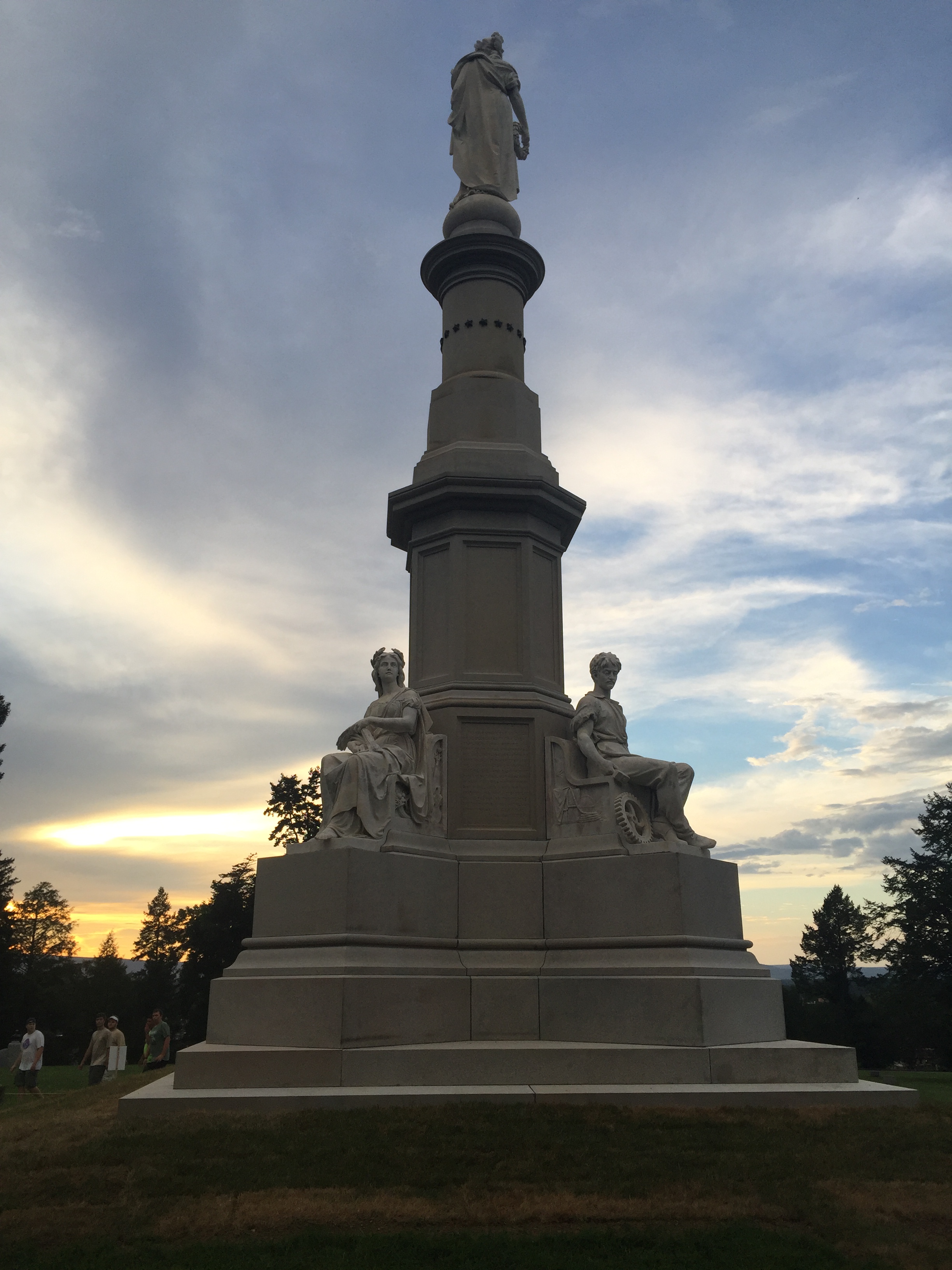
Four Score and seven years ago our fathers brought forth on this continent, a new nation, conceived in liberty, and dedicated to the proposition that all men are created equal.
Now we are engaged in a great civil war, testing whether that nation, or any nation so conceived and so dedicated, can long endure. We are met on a great battle-field of that war. We have come to dedicate a portion of that field as a final resting-place for those who here gave their lives that that nation might live. It is altogether fitting and proper that we should do this.
But, in a larger sense, we can not dedicate…we can not consecrate…we can not hallow…this ground. The brave men, living and dead, who struggled here, have consecrated it far above our poor power to add or detract. The world will little note nor long remember what we say here, but it can never forget what they did here. It is for us, the living, rather, to be dedicated here to the unfinished work which they who fought here have thus far so nobly advanced. It is rather for us to be here dedicated to the great task remaining before us…that from these honored dead we take increased devotion to that cause for which they gave the last full measure of devotion; that we here highly resolve that these dead shall not have died in vain; that this nation, under God, shall have a new birth of freedom; and that government of the people, by the people, for the people, shall not perish from the earth.
 I Digress