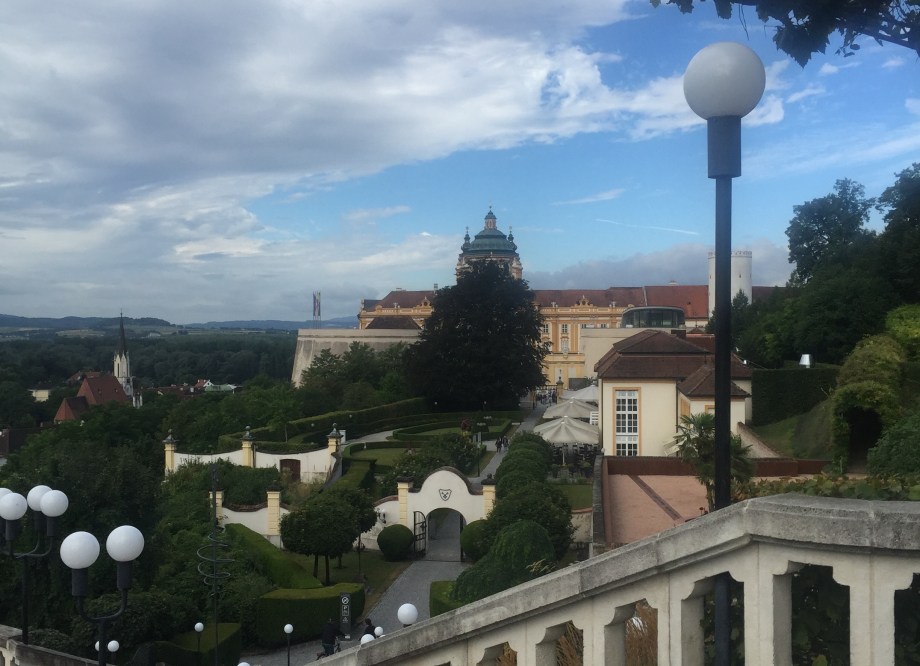
Every so often I find myself moving along, caught up in the minutiae of my day, usually thinking about lunch, when suddenly I turn a corner and am confronted with a sight that makes the world around me stop spinning. Sometimes it’s the giant harvest moon, sometimes it’s clouds (I’m so easily amused, y’all), and sometimes it’s a place like Melk.

I hadn’t thought much about Melk before we got there, hadn’t read anything to prepare for the visit, it was on our itinerary, we had a guide, I left it alone. And there really wasn’t anything about the morning of our arrival that hinted at anything particularly stunning. We couldn’t see the abbey from the spot our ship docked, on a relatively unassuming point in the river. We shuffled on to our buses for a short ride up a hill, catching a glimpse of the abbey’s yellow walls on the drive, but otherwise surrounded by trees and shrubs and instructions about getting back to the ship after our tour.
Leaving the bus-park, I caught the image at the top of this post, which, believe it or not, was only a taste of what lay in store.
The abbey was founded in 1089. Leopold II happened to have a spare castle and he very sweetly gave it to a group of Benedictine monks to use as their monastery. As I understand it, the monastery is simply the dwelling place of the monks. An abbey is a religious community. So I suppose that means Melk would have been founded as a monastery and then as they developed their community, their school, their library, their patronage, they grew into being an abbey…if I got that wrong, please don’t hesitate to correct me! All the lovely yellow was clearly not a part of the original castle donation, only two towers remain from the 11th century building, the rest was built in the grandest Baroque style between 1702 and 1736.
One enters Melk today, as ever, through the front courtyard, past the obligatory restaurant and slightly skirting the entrance to Melk’s high school (900 students strong).
It was in the courtyard we met our guide, gathered our tickets and then went inside. Our cruise director told me later that since the Melk guides work for the Abbey, they tend to be difficult for him to coordinate (differing rules and regulations I suppose), but since I was not charged with logistics on this trip, I thoroughly enjoyed our guide and our guided tour through the Abbey.

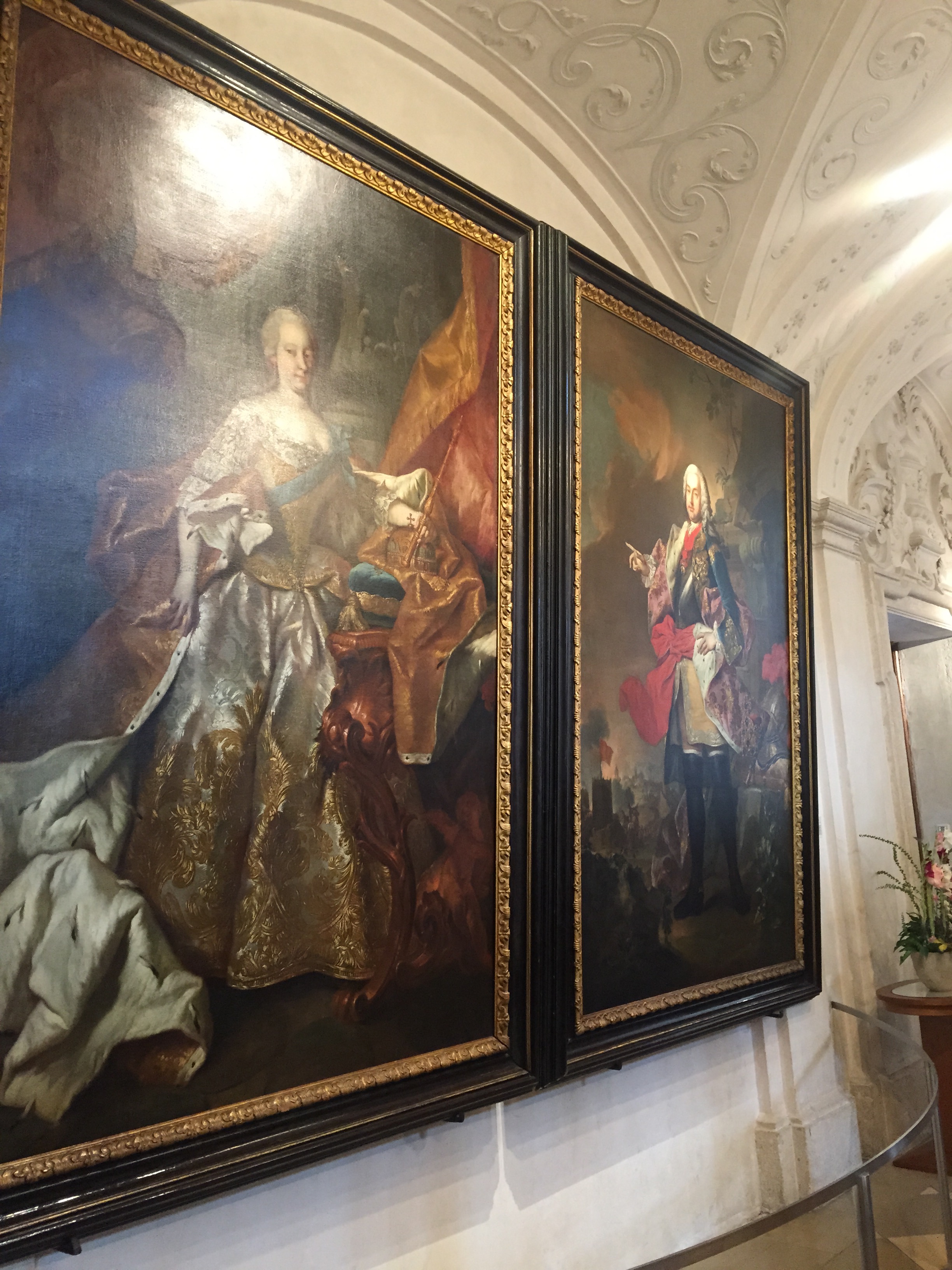
Since Melk was founded by (and I assume partially maintained with) Imperial support, part of the monastery was kept for many years as the royal guest house. That section still welcomes the Abbey’s guests and funnels them through the museum of curiosities into the fascinating marble hall, the library, and finally into the astonishingly Baroque church before depositing them into the gift shop.
Melk’s library is truly fantastic. They have about 100,000 volumes including 750 incunabula (printed between about 1455 and 1500). They also have some really beautiful globes like the ones at the Strahov library in Prague. No photos allowed in this library, but believe me when I tell you I could spend days happily perched in one of the sunny windows taking it all in.
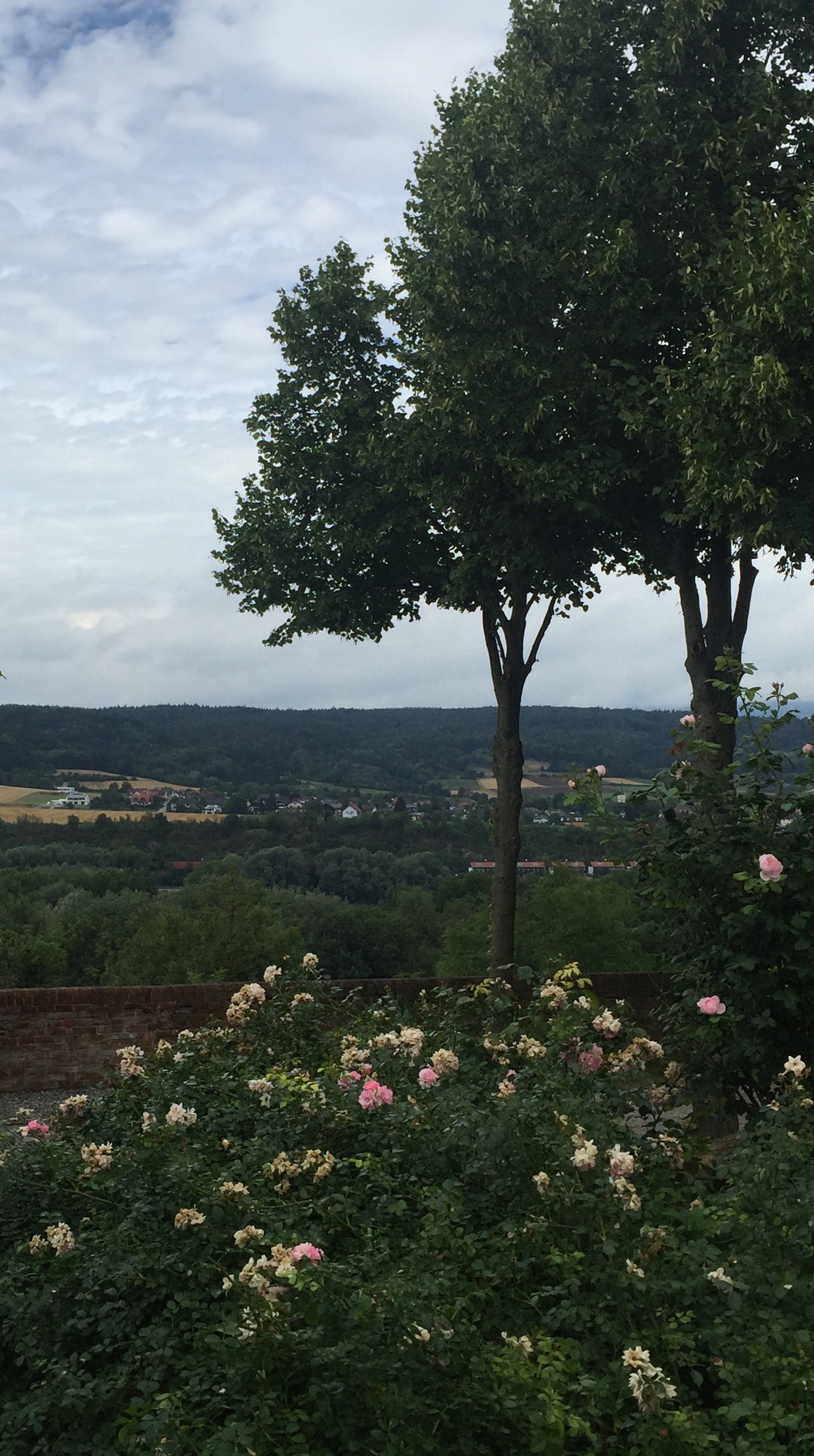 The most indelible piece of Melk, however, is not its history (0r, gasp, even the library). It is, after all, similar to so many other abbeys that have survived the centuries. No, the part of Melk that made it such a memorable moment in our trip, was the pervasive sense of awe that overtook me there and then followed me away again. I’ve found that feeling to be a recurring pattern in my travels, and one that I have perhaps begun to consciously seek out. I think that was what I was looking to find at Gettysburg, and it is the feeling that draws me to so desperately want to visit both the Hagia Sophia and Machu Picchu. The mostly unexpressed desire to get out of the minutiae rattling around in my head and to just feel dwarfed by something so much larger and grander than myself.
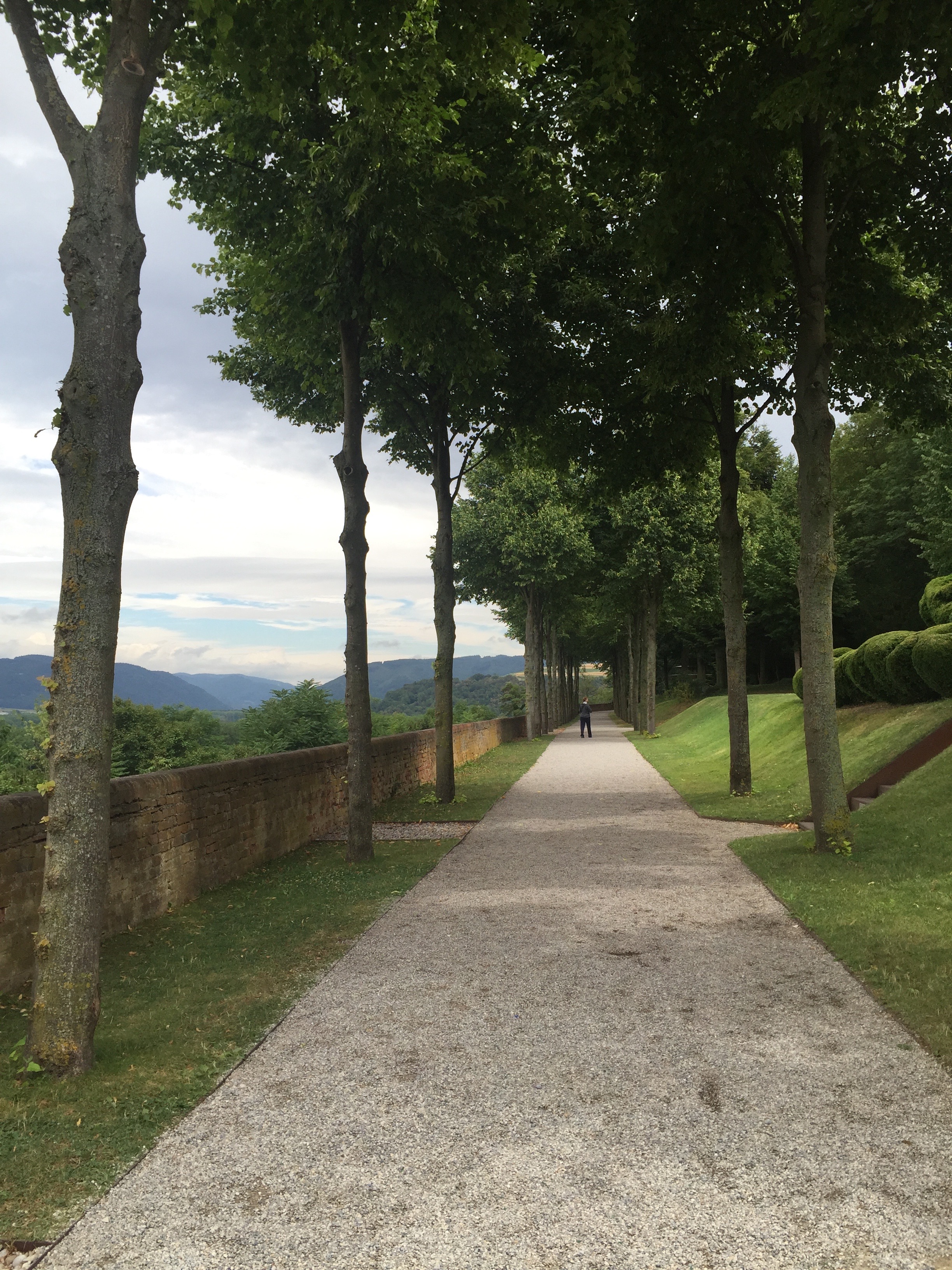
So often in life I find myself eager to quantify things. I like to make lists and tick things off of them. I have an often overwhelming need to be productive, to have something to show for myself. Perhaps that is part of the incentive behind this blog as well, the desire to somehow legitimize my travels a bit more by writing about them afterwards. I’m sure there’s a lot more to it than that, but it is how I feel sometimes.
 But perhaps, sometimes, the experience itself is the point. Isn’t that why we go after all? To experience something, to maybe let it change us a little in the process? And in the end, isn’t that what we’ll remember most? Those experiences and moments that touched us in such away that we couldn’t help but carry them along with us? Isn’t that, in the end, all we can carry with us?
So that’s the message for today then. Look up, look around, get up and go, whether you actively seek them out or not, let the moments in. Pause long enough to feel some awe, and then take it with you as you journey onward.

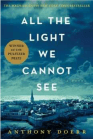 *RECOMMENDED READING: All The Light We Cannot See: Anthony Doerr
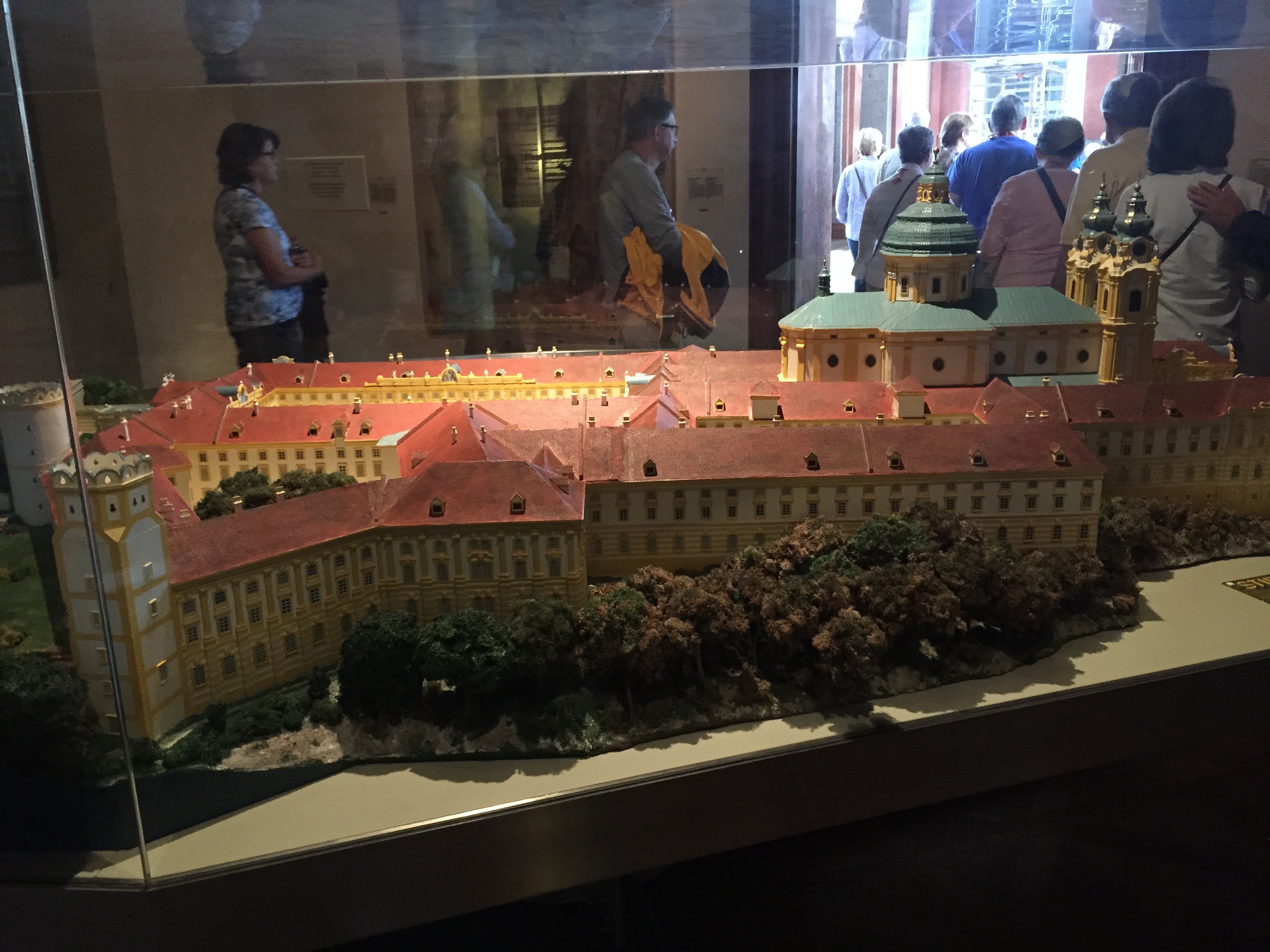
I link this here, because I read this right before we left, and so the models in Melk’s museum reminded me strongly of Marie-Laure’s models in the book. This thing is a tome, almost 600 pages, but I could not put it down. It is so perfectly, beautifully written, so heart-wrenchingly compelling, so stunning. Perhaps another reason to pair it with Melk. It weaves together the stories of a blind girl, a refugee from Paris in WWII who inadvertently becomes part of the French resistance, and a German orphan boy, son of a mine worker, mechanical genius, who, to escape a life in the mines, gets entrenched in the Hitler youth. All the blurbs cannot do it justice. So go now, book your ticket to Austria, and sit on a bench in the gardens at Melk and read All the Light We Cannot See.
 I Digress