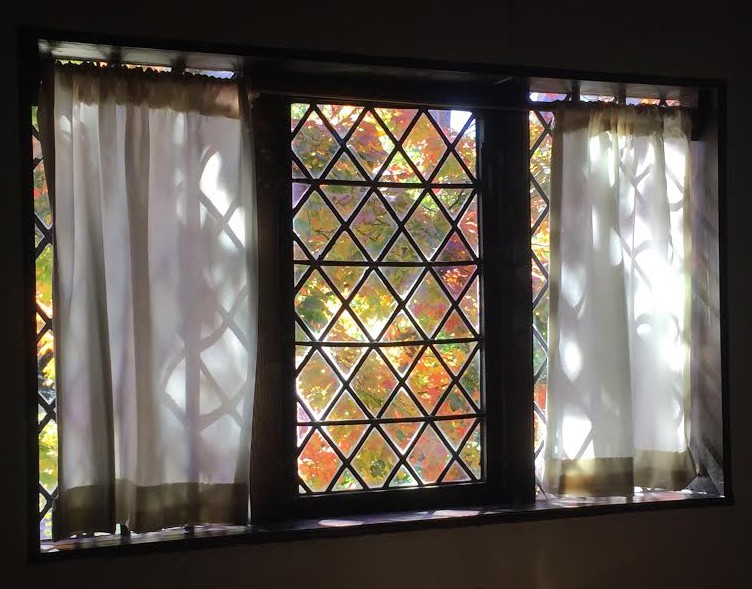

Y’all, fall is magic. The gloaming of the year. The trees and the sky catch on fire and anything is possible. Sweaters and pumpkin and apples and cozy blankets, and HOCUS POCUS!!!! Fall. I can’t say enough about it. It thrills me through and through. I can’t deny fall is one of the big reasons I decided to move to New England. Because, you know, when you think of fall, you think of Hocus Pocus, and Hocus Pocus is set in Salem, which is in Massachusetts, which is in New England. And that, as they say, is that.
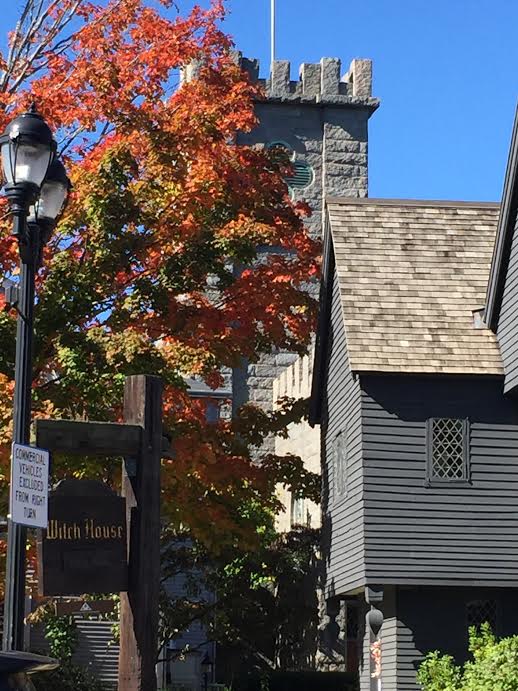
On my very first visit to Boston, the friend I had come to see pointed out to me how very close Salem was, and so, of course, I had to go there. It was September 2010, the crisp was just beginning to settle and the edges of the leaves were starting to go bronze, and I came for the first time to a place that had monopolized my fall dreams since before I even remember having them.
Like most first-time visitors to Salem I went for the witches. As a morbid young child (who hung a bust of Henry VIII in her bedroom to behead any monsters who might invade in the night) I was equally fascinated by that strange and terrible year in history we call today the Salem Witchcraft Trials. I made a powerpoint about it in school, so I suppose I did do some looking into the actual history at some point.

However, being 11, my impressions were indelibly colored by Bette Middler singing I Put a Spell on You in that fabulous green dress. (Incidentally, I vividly recall my folder from Bible class being filled with sketches of that same green dress, and other witchy things…take from that whatever you will). The Salem you will visit today is similarly marked by that much more modern image of witchcraft, and while there are still a few quiet spots that seek to preserve the true history of the hysteria that made Salem famous, most of it today is indeed hocus pocus. Not that there is anything at all wrong with that. Especially in the fall.
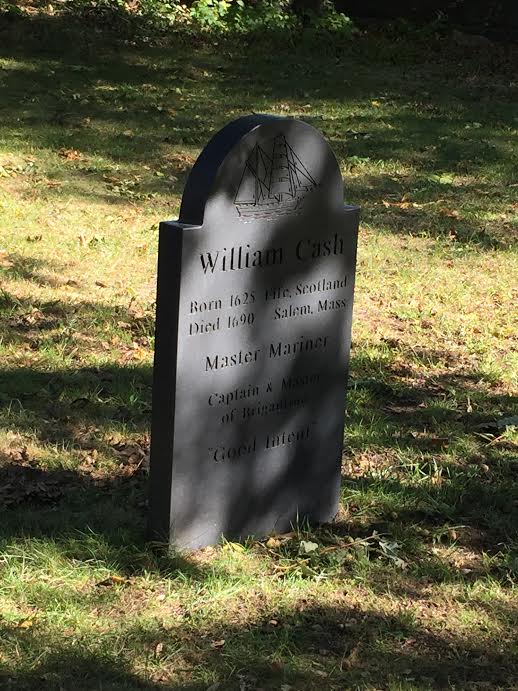
That first trip thrilled me. The old burial ground, the leaves, the very New England clapboard houses…and after moving here I did go back several times to enjoy Salem as most folks do, as a casual tourist. Then last year I had the great good fortune of being commissioned to lead a small group on a day trip to Salem which spawned a flurry of long-overdue research and digging, and which opened up to me a whole new and infinitely more exciting town than the one I had so long loved from the outside in.
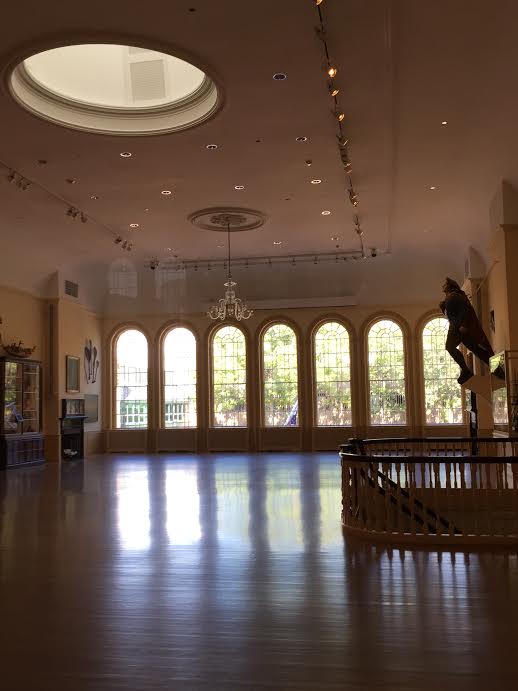
As thrilled as I was to be diving in to the heart of the Witchcraft Trials (and that is what I do still find myself talking about the most on tours, and in life- odd I know), Salem’s maritime history ended up fascinating me much more. Ever since my girl scout troop spent a night on the tall ship Elissa in Galveston when I was about 10 (and perhaps even before that, though I can’t remember) I’ve had a recurring interest in tall ships. They really are engineering marvels, and you can’t deny the romance of them. Well, Salem was built on the backs of those ships and the men who built them and sailed them and financed them. At one moment in history they were the most prosperous port in the country and one of the most prosperous in the world. Those Salem captains who managed to sail either beyond the Cape of Good Hope or Cape Horn were invited to join the prestigious East India Marine Society, and the treasures they brought back from their distant voyages formed the basis of the collection that is now the Peabody Essex Museum.

Then the War of 1812 happened, and the ensuing embargoes, and Salem began to struggle. Stephen White, one of Salem’s most successful merchants did his utmost to keep the town afloat and carry it through the rough patch into a new era. Then, in 1830, Stephen’s uncle was brutally murdered in his bed, Stephen was accused, and in the aftermath of that famous trail Stephen took his money and his family and left Salem to fall.
The Salem murder stained the town for years to come, but did inspire the writings of both Edgar Allen Poe (some say The Tell Tale Heart was inspired by prosector Daniel Webster’s summation in that trial), and Salem’s own son, Nathaniel Hawthorne. The interest in the witchcraft trials eventually pulled Salem back out of its depression, starting with the simple sale of spoons in the early 1900s, expanding with the popularity of the show Bewitched in the 1970s, and then taking off with great vigor when Hocus Pocus was released in 1993. It all comes full circle, doesn’t it?
If you are planning your own visit to Salem today, here are my suggestions for you:

Transportation: Take the train from Boston or drive- I actually don’t have a preference for you. It will take about the same amount of time (about 30 minutes), and the cost of the train ticket there and back ($14- as of the last time I went…the MBTA keeps hiking fares) is about the same or more than what you can pay to park in the nice big parking lot behind the mall in Salem. The only problem I ever encounter with taking the train (the station is about a 5 minute walk from the heart of everything) is timing my return trip. The commuter rail only runs so often, so for convenience a car might slightly eek out a win here.
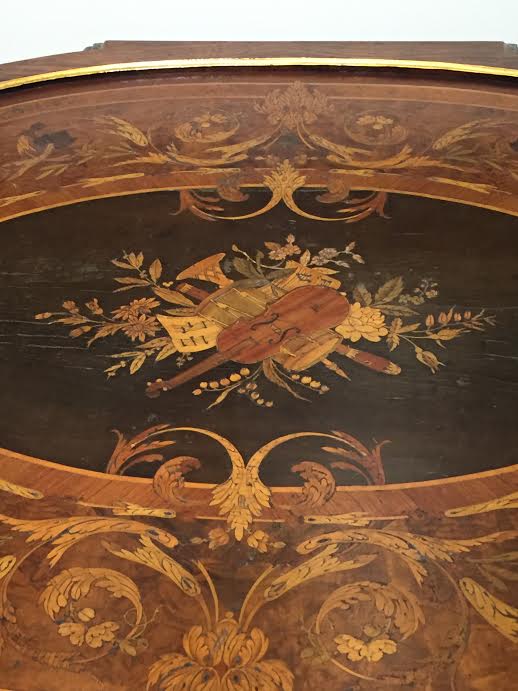
The Peabody Essex Museum: Did I already mention this place? I did. Because it is a really fabulous museum that I think a lot of people miss when visiting Salem. Do yourself a favor, skip the Salem Witch museum and go here instead. Don’t miss the Yin Yu Tang house! You’ll need a timed ticket for that, so ask about it when you purchase your admission. And do take the time to watch some of the videos in the exhibit once you exit the house- fascinating and well worth the time! Also, don’t forget to ask about daily tours to the historic homes. The mansion where Captain White was murdered is in the PEM collection, as is the Ropes Mansion which was Alison’s house in Hocus Pocus! The Ropes Mansion has odd hours though, so if you’d like to go inside, you might want to call the PEM and check out the current offerings before you go. I was not terribly impressed with our docent on my tour, but you can’t get in the houses otherwise, so hopefully you’ll be more lucky. The docents I’ve had in the museum itself have been great. One other thing not to miss, is the East India Marine Society Hall. Stephen White spearheaded this project in 1825 to house the society’s collections and to host their functions. It was a real effort to highlight Salem’s culture during a difficult period for the town, and the building is beautiful. You can see it from Essex street, but you can only enter it through the rest of the museum- it’s kind of hidden in the back, so don’t forget to forage through! The PEM cafe can also usually be counted on for a hearty bowl of soup and a roll when you start to saturate!

The Witch House: You can’t go to Salem without exploring the Witchcraft Trials, but you want to do it right. Go here. This was the house of one of the magistrates, Jonathan Corwin, who heard evidence in Salem when the hearings first began. You can do a self-guided or a guided tour of the home, and these folks do a really excellent job orienting guests to the context of 1692- what life was like in Salem and Salem Village, how things got started…I got some really great information from the guides here when I was doing my own research last fall.
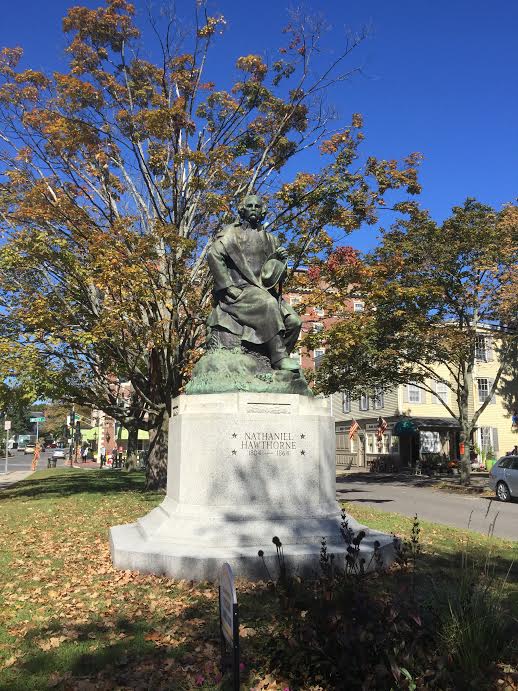
The House of the Seven Gables: You’ll also have a hard time getting in and out of Salem without running into Nathaniel Hawthorne at some point along the way. Hawthorne’s birthplace was moved to this property, so you can self-tour that while you’re here, but the Seven Gables tour is wonderful as well. You’ll get a little more about Hawthorne, but also a wonderful walk through time. The house as we know it today was assembled bit by bit over several generations, so you can really get a sense for evolving styles. Also there is a secret staircase and a fabulous attic nook- more stuff of my childhood dreams.
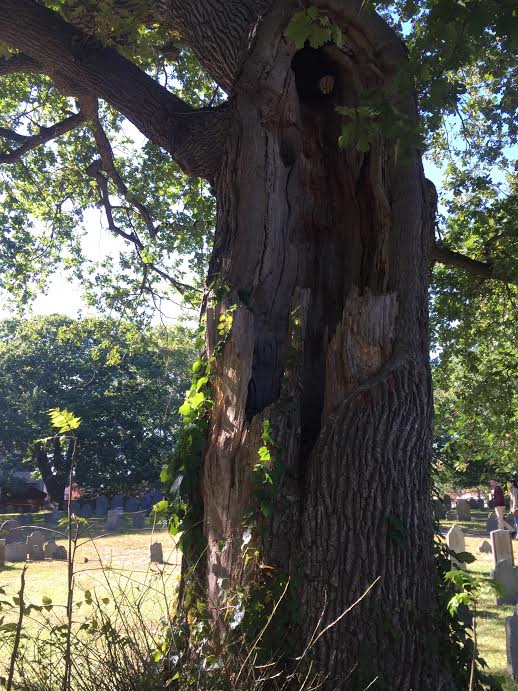
The Salem Burying Point: The burial ground in Hocus Pocus is in Marblehead, not here- but Salem’s old burial ground is a lovely one to visit. Just outside it is the Witch Trails Memorial. Most of the 20 executed for witchcraft during the hysteria were buried in unmarked graves, and so they are now honored and remembered here. It is a lovely spot to visit and to reflect on the events of 1692.
Black Cat Tours: You know I love a good walking tour to get my bearings, and if you are looking for engaging history that covers and goes beyond 1692, this is great one. This is a small company, and I toured with one of the owners who clearly knew her stuff, and told the stories well. They do evening tours as well, though I haven’t had a chance to try those out, I’m sure they’re just as good as the daytime walks!


Melita Fiore Patisserie: I seem to always eat my lunch on the go or at the PEM when I’m in Salem, so I sadly, don’t have any good restaurant recs for you (if I acquire some in the future, I’ll come back and add them in), but for afternoon sweets and tea, Melita Fiore Patisserie is the place! They bake on site, and have delectable, fluffy macarons! Also a good assortment of actual tea for those of us who are not satisfied with a cup from Dunkin’s!
Wynott’s Wands: Full disclosure, this place is run by the gentleman who also runs the Freedom Trail and Boston Night Tours that I give. That said, I am a die hard Harry Potter fan, and if you can’t make it all the way to the Wizarding World of Harry Potter in Florida, Salem is certainly the next best spot to get your wand! You can get your tickets for the Salem Night Tour next door.
There is obviously more to explore in Salem than just these things, but this is where I would start! And there is obviously more to fall in New England than just Salem, I’ll undoubtedly be back with more on that as well. But for now, go enjoy your apples and pumpkins and start getting ready, Halloween is just around the corner!

 I Digress