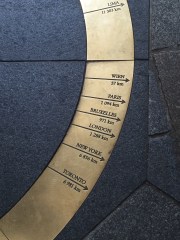

2020 was an excellent year for escapism. It was also a year that demanded a lot of hard looks and reexamination and which called for a good measure of comfort thrown in. In other words, 2020 was a good year for reading, and I did a lot of it. The eight books I’ve listed here are a selection of the nonfiction I read for the first time last year and particularly enjoyed. If you’re interested in my fiction selection (a little more escapism), click here!
- Meg, Jo, Beth, Amy: The Story of Little Women and Why It Still Matters: Anne Boyd Rioux

I think I stumbled across this little gem in D.C. when Dylan and I were there in 2019, but it just as likely could have been on the shelf at Louisa May Alcott’s Orchard House in Concord while I was there waiting for an EF group I was guiding to finish their tour. Either way, I finally picked it up to read around my birthday last year and was finishing it just as the world began to collapse. Whether it was that context, the content of the book itself, or a combination of both, this one really got me thinking. I have always loved Little Women, and Beth was always my favorite of the sisters. Anne Boyd Rioux’s analysis helped me to dive a little deeper into what made the story and that specific character so influential to me and all the others who love and continue to revisit Little Women. Whether you are a fan of the book, any of the film adaptations, or are just curious what all the fuss is about, this is a conversational and thought-provoking read about both a well-beloved story and women in literature.
2. The Fellowship: The Literary Lives of the Inklings: Philip Zaleski & Carol Zaleski
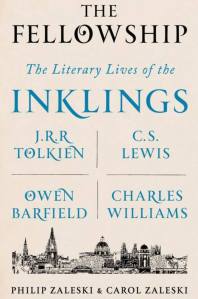
My first introduction to the Inklings came when I read C.S. Lewis’ The Lion the Witch and the Wardrobe and J.R.R. Tolkien’s The Hobbit as a child. I waded through The Lord of the Rings in my teens and was well set to be thrilled when I entered Oxford University, the hallowed home of Lewis and Tolkien’s famous writing group, for the first time in my early twenties. I ate many a plate of fish and chips at the Bird and the Baby during my two terms studying abroad and always meant to learn more about the illustrious group of fellows who shared many a pint while discussing their work in its cozy corners, but I never quite got around to it until last April. I picked up my copy of The Fellowship at, where else, the Harvard Bookstore Warehouse Sale, and watched it collect dust on my shelf for a while, daunted by the size of it. But what better time to work your way through the tomes on your shelves than during a pandemic? I dove in with the goal of reading fifteen pages a day, a goal I easily met and surpassed. The four Inklings members highlighted here, along with all the others, navigated the span of two devastating wars with their senses of wonder intact. 2020 certainly felt like a perfect time to be inspired by several fine examples of the resilience of human curiosity and imagination.
3. The Brother Gardeners: Botany, Empire, and the Birth of an Obsession: Andrea Wulf

I have spent a good few years at this point deep in the study of the eighteenth century. I had mostly focused my reading on politics and daily life until I started learning a tour of the Harvard Museum of Natural History a couple of years ago—an endeavor which awakened in me a fascination with natural history. I found The Brother Gardeners at the Harvard Bookstore when the museum tour was fresh on my mind. I finally picked it up to read last spring in hopes of learning a little relevant history while stuck at home. This is another history book that reads like a novel. It is engaging, deeply fascinating, and has made me start looking a lot more closely at the plants that surround me in this city. It also made me deeply wish for a garden (certainly not a new desire, but one that has become more pronounced as I’ve gotten older), though with the uncontrollable heating in our apartment nine months out of the year, it is almost impossible to keep anything green alive. Another goal for our future house! In the meantime, I can keep reading about other folks who have loved plants and try to learn a little in preparation for my own one-day garden.
4. As If an Enemy’s Country: The British Occupation of Boston and the Origins of Revolution: Richard Archer
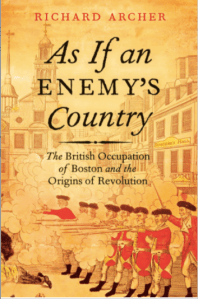
I found this in the tiny shop at The Old Manse in Concord. It seemed like a good read to get a new perspective on some familiar material, and I was certainly not disappointed. This is a captivating look into the very real economic and personal fallout of living in a city occupied by what was essentially a foreign power. It helped me to look with new eyes at how it must have felt to live in Revolutionary Boston—not only for the citizens who called the city home but also for the King’s troops who were stationed here. I also found the insights into the different forms of protest used in Boston in the 1760s and 1770s particularly poignant as I finished reading this at the end of May 2020, just as the Black Lives Matter protests were surging to life in the streets of Boston. It is certainly true that history can continue to offer deep insights into the present. Read thoughtfully, my friends!
5. The Power of Ritual: Turning Everyday Activities into Soulful Practices: Casper Ter Kuile
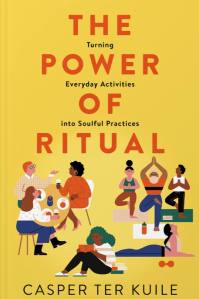
Casper Ter Kuile is one of the founders of Harry Potter and the Sacred Text—a community that has become a lifeline and a real joy for me over the past few years. Needless to say, when his book came out last summer, I was eager to read it. The Harry Potter experiment grew out of a question with which Casper and some of his fellow students were grappling at Harvard Divinity School: if people in the wider world today seem to be gravitating away from traditional religious communities, are these sacred spaces and the purposes they served being somehow replaced in society or are they merely disappearing? Where are secular folks turning to find meaning? His answer in this book is that there are, in fact, many places and spaces, both virtual and physical, that are popping up to offer the kind of community support and reflective opportunities that were once primarily the domain of traditional religious institutions, and that this shift is not a bad thing. It made me think more carefully both about the spaces I choose to frequent and how I interact with them and also about how mindfully (or not) I move through my daily life.
6. Becoming: Michelle Obama

Last summer, as my despair over the escalating farce in Washington deepened, I turned to two sources for solace and answers: The West Wing and the Obamas. I’ve watched The West Wing numerous times, but this was my first read of any Obama-written work. I wanted to be reminded that the eight years between my senior year of college and 2016 had, in fact, been real and to see if I could glean any insight into what had happened to allow an orange toddler with fascist leanings into the Oval Office. Michelle Obama’s memoir was a breath of fresh air. To be reminded that both the executive office and the task of running a country as vast and diverse as ours do indeed carry weight and that there are still those who take the responsibility and privilege of that office and that task seriously. I appreciated her thoughtfulness, reflectiveness, and eloquence. She is one classy lady: a real role model.
7. The Splendid and the Vile: A Saga of Churchill, Family, and Defiance During the Blitz: Erik Larson
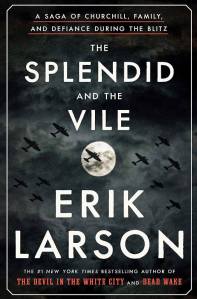
I first read Erik Larson’s In the Garden of Beasts back in 2012, when I was new to Boston and recovering from an appendectomy. I suppose that account of the American ambassador to Berlin in the mid-1930s may have been a good place to turn for insight into Trump’s America, but it just seemed a touch too close to home last year. Fortunately for me, Larson’s new book last summer was not about Hitler’s Germany exactly but about Churchill’s Britain during the first, harrowing year of his premiership. It may seem that reading about the London Blitz would also be a dangerous endeavor during a global crisis, but I can’t resist Churchill. And whenever things seem most bleak, I remind myself that if the British Expeditionary Force could evacuate the beaches of Dunkirk, well, anything really is possible. So I cheerfully dove into Larson’s engaging account of the Churchill family, their entourage, and their doings between May 1940 and May 1941. As with most of Larson’s histories, The Splendid and the Vile reads like a novel. Certainly a bit harrowing at times, but also strangely reassuring. We find ourselves living in trying times, but the world has come through worse before now. While we have certainly been walking the knife’s edge in the last few years, it is still possible to adjust our course. There is always hope.
8. Wintering: The Power of Rest and Retreat in Difficult Times: Katherine May

I came across this last little gem in Bear Pond Books in Vermont. I picked it up, read the blurb, put it back, bought something else, then came home and got the audiobook because I just couldn’t stop thinking about it. It was exactly the right read for the end of 2020. A memoir of sorts, but really more a deep look into what it means “to winter” in several cultures for whom the dark, cold season is a stark, serious, and recurring reality. And then it is a reflection on how we might learn, from those cultures who physically weather deep winter each year, how to emotionally winter the darker periods in our lives: from physical and mental illness to career setbacks to, oh, global pandemics. I found here much-needed insight and perspective on the darker periods, small and large, that I have faced and am facing in my life along with tacit permission to let these moments be what they are—seasons in life that are starker and harder but that will pass, as all things do, into springtime again.
And there you have it. A small sampling of the reading that carried me through the mire of 2020. As ever, you can find the complete 2020 Read List below. Whether you find your next read on this list or elsewhere, happy reading!
- Spindle’s End: Robin McKinley (1.6.20, 422 pgs.)
- Rose Daughter: Robin McKinley (1.17.20, 304 pgs.)
- The Starless Sea: Erin Morgenstern (1.19.20, 512 pgs)
- Beauty: Robin McKinley (1.22.20, 256 pgs)
- The Outlaws of Sherwood: Robin McKinley (1.24.20, 345 pgs.) January: 1,839 pgs.
- The House at Lobster Cove: Jane Goodrich (2.29.20, 377 pgs) February: 377 pgs.
- 17 Carnations: The Royals, The Nazis, and the Biggest Cover-Up in History: Andrew Morton (3.24.20, 327 pgs.)
- Justice Hall: Laurie R. King (3.29.20, 352 pgs.)
- Meg, Jo, Beth, Amy: The Story of Little Women and Why It Still Matters: Anne Boyd Rioux (3.31.20, 225 pgs.) March: 904 pgs.
- The Moor: Laurie R. King (4.9.20, 287 pgs.)
- A Letter of Mary: Laurie R. King (4.14.20, 275 pgs.)
- The Fellowship: The Literary Lives of the Inklings: Philip Zaleski & Carol Zaleski (4.22.20, 512 pgs.)
- A Monstrous Regiment of Women: Laurie R. King (4.24.20, 278 pgs.) April: 1,352 pgs.
- Island of the Mad: Laurie R. King (5.2.20, 299 pgs.)
- The Brother Gardeners: Botany, Empire, and the Birth of an Obsession: Andrea Wulf (5.8.20, 246 pgs)
- The Game: Laure R. King (5.11.20, 400 pgs.)
- The God of the Hive: Laurie R. King (5.20.20, 354 pgs)
- Once Upon A River: Diane Setterfield (5.31.20, 496 pgs)
- As If an Enemy’s Country: The British Occupation of Boston and the Origins of Revolution: Richard Archer (5.31.20, 232 pgs.) May: 2,027 pgs.
- The Historian: Elizabeth Kostova (6.14.20, 642 pgs)
- Pride and Prejudice: Jane Austen (6.20.20, 375 pgs.)
- Garment of Shadows: Laurie R. King (6.25.20, 260 pgs)
- The Power of Ritual: Turning Everyday Activities into Soulful Practices: Casper Ter Kuile (6.29.20, 224 pgs.) June: 1,501 pgs.
- Emma: Jane Austen (7.6.20, 453 pgs.)
- F*uck No!: How to Stop Saying Yes When You Can’t, You Shouldn’t, or You Just Don’t Want To: Sarah Knight (7.9.20, 304 pgs.)
- Calm the F*ck Down: How to Control What You Can and Accept What You Can’t So You Can Stop Freaking Out and Get On With Your Life: Sarah Knight (7.14.20, 304 pgs.)
- Get Your Sh*t Together: How to Stop Worrying About What You Should Do So You Can Finish What You Need to Do and Start Doing What You Want to Do: Sarah Knight (7.20.20, 304 pgs.)
- Two Steps Forward: Graeme Simsion and Anne Buist (7.22.20, 362 pgs.)
- Becoming: Michelle Obama (7.28.20, 448 pgs.) July: 2,175 pgs.
- How to Be an Antiracist: Ibram X. Kendi (8.10.20, 320 pgs.)
- The Witches Are Coming: Lindy West (8.13.20, 272 pgs)
- Celtic Mythology: Tales of Gods, Goddesses, and Heroes: Philip Freeman (8.16.20, 296 pgs.)
- The Amulet of Samarkand: The Bartimaeus Trilogy, Book 1: Jonathan Stroud (8.18.20, 462 pgs.)
- Who Thought This Was a Good Idea?: And Other Questions You Should Have Answers to When You Work in the White House: Alyssa Mastromonaco (8.26.20, 272 pgs.) August: 1,622 pgs.
- Harry Potter and the Sorcerer’s Stone: J.K. Rowling (9.22.20, 309 pgs.)
- The Splendid and the Vile: A Saga of Churchill, Family, and Defiance During the Blitz: Erik Larson (9.28.20, 509 pgs.) September: 818 pgs.
- The Hobbit: J.R.R. Tolkien (10.13.20, 300 pgs.)
- Riviera Gold: Laurie R. King (10.21.20, 368 pgs)
- The Best Punctuation Book, Period: A Comprehensive Guide for Every Writer, Editor, Student, and Businessperson: June Casagrande (10.22.20, 256 pgs.)
- Dreamers of the Day: Mary Doria Russell (10.30.20, 270 pgs.) October: 1,194 pgs
- The World of Critical Role: The History Behind the Epic Fantasy: Liza Marsham (11.6.20, 320 pgs.)
- The Binding: Bridget Collins (11.12.20, 435 pgs.)
- Meet Me at the Museum: Anne Youngson (11.17.20, 272 pgs.)
- Wintering: The Power of Rest and Retreat in Difficult Times: Katherine May (11.23.20, 256 pgs) November: 1,283 pgs
- The Bear and the Nightingale: Katherine Arden (12.1.20, 333 pgs.)
- The Mermaid and Mrs. Handcock: Imogen Hermes Gowar (12.25.20, 487 pgs.) December: 820 pgs
Total: 46 Books, 15,912 Pages
 I Digress